












Since the age of the pharaoh, people have spent their time consuming media for entertainment. Even through hieroglyphs inscribed onto papyrus leaves or into stone tablets, it has been inherent in humans throughout history to find fulfillment through the absorption of media that influences daily life. Print and physical media, like books, newspapers, vinyl, CDs, and DVDs, were the main agents for mass communication for hundreds of years. Through the mediums of script, sound, and video, physical media told stories to whoever could get their hands on it, sending the author’s messages to influence the minds of millions of people over the years. Thriving from the ‘70s to the early 2000s, physical media became practically obsolete once inventions like the internet and smartphones entered the picture.
In time, Kindles replaced books, news broadcasts and radio replaced newspapers, and streaming services like Spotify and Netflix replaced CDs and DVDs. The digitization of these vessels for entertainment created new options, ones that were portable, cheaper, and gave access to a vast media library. Physical media seemed to have completely died out since its digital counterpart took its place, so how are record and book stores still so successful, and how come so many people consider themselves collectors of physical media?
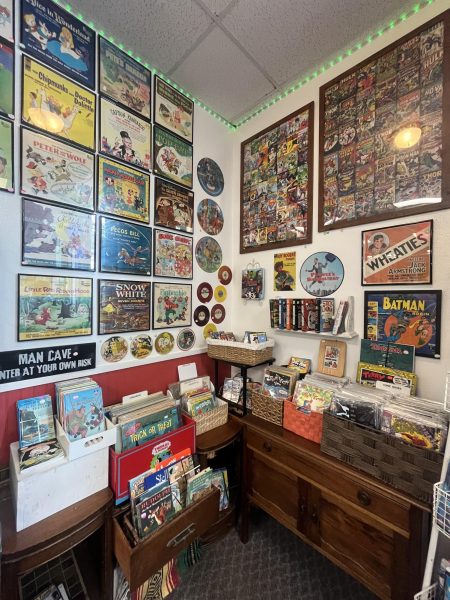
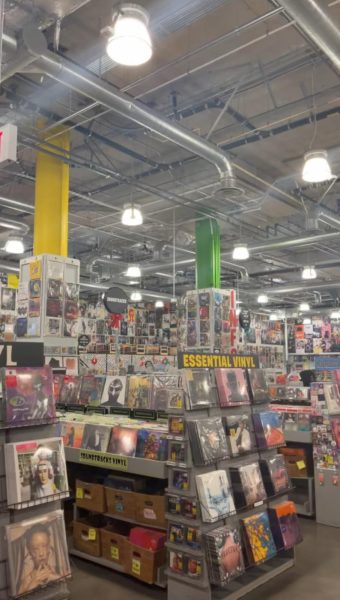
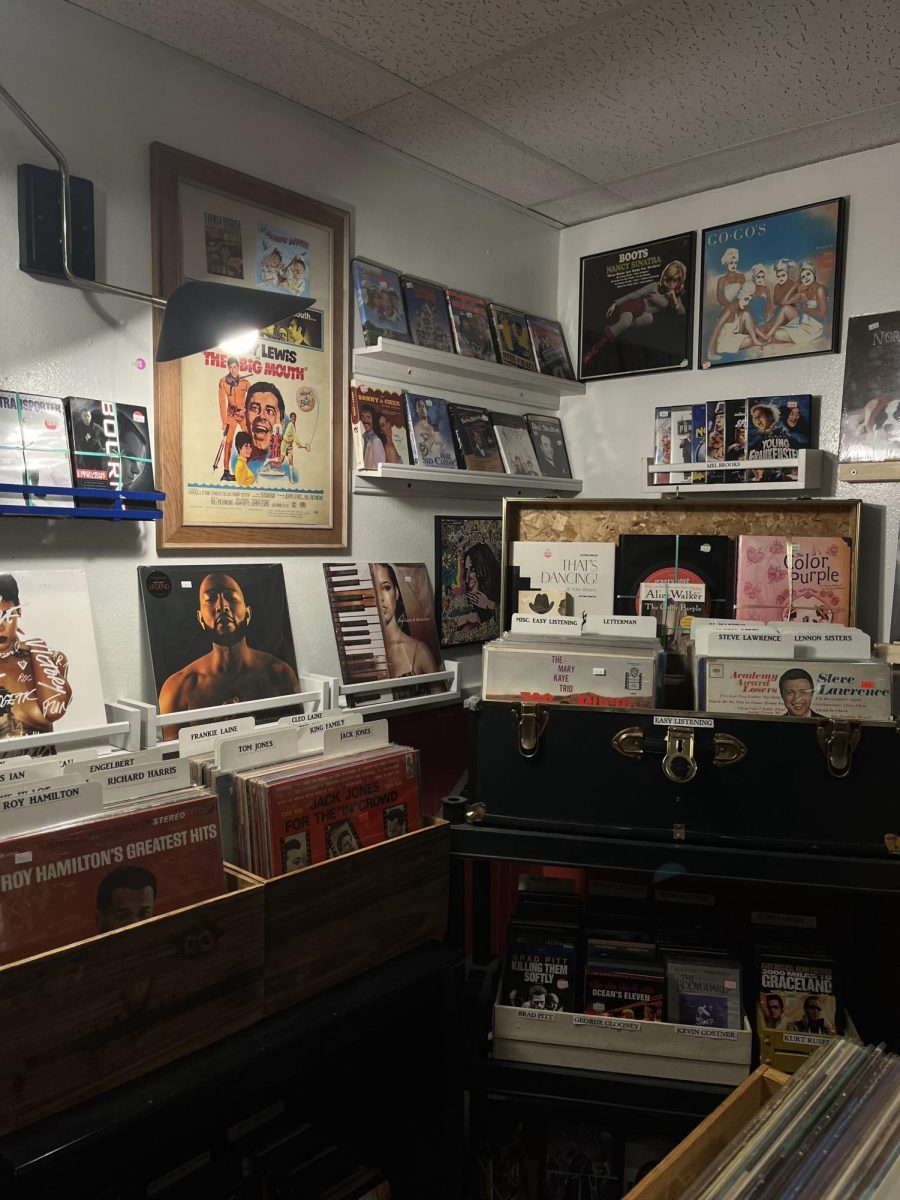
Major record stores like Amoeba Music are often crowded with music and film lovers looking for the next addition to their collection of physical entertainment, whether it be vinyl, CDs, or even DVDs. And if one were to look around to see the faces of these record store regulars, they would find that a majority of them lack wrinkles and gray hair. Aside from old-timers trying to hold on to the media they grew up with, teenagers are a major demographic in keeping physical media alive. Teenage music and film enthusiasts participating in recent trends of collecting their favorite albums and movies contribute significantly to the success of physical modes of media. In fact, a survey conducted by Vinyl Alliance of 2,500 vinyl collectors worldwide found that 76% of Gen-Z collectors (ages 16-28) buy records at least once a month. This resurgence of physical media collection among teenagers can be attributed to the novelty of “vintage” media, or perhaps nostalgia for a time they did not experience, a psychological phenomenon called “anemoia.”
Since this collective nostalgia in teenagers did not spark from growing up listening to vinyl and regularly using record players, there must have been a different culprit in exposing young people to this form of music; record labels. Major record companies such as Universal, Sony, and Warner use vinyl and CDs as a marketing tactic, tapping into Gen-Z’s prioritization of aesthetics to drive sales. Despite a significant portion of the target demographic falling victim to this strategic marketing tool, many people still grow their collections solely for the sake of the immersive experience and not aesthetics or trends. Some even inherited them, acquiring the collection of a parent or older sibling to use for the next generation’s enjoyment.
Take Kalia Soliz, a sophomore at Kennedy High School. She is an avid collector of vinyl records and CDs, with most of her CDs being passed down to her from relatives, while her vinyl collection has been meticulously accumulated from various record stores around the country. Soliz describes the experience of acquiring albums when visiting new shops as “a piece of [her] that [she] remembers from that place.” Physical media can not only serve as a vessel for entertainment but also tangible memorabilia of certain experiences and places that people cherish, allowing them to relive such memories through their collection.
She states that she enjoys the trends of young people expanding their media horizons, stating that “it’s nice that kids are really getting to see how it used to be,” and many others would agree with this sentiment. In an increasingly digitized world, older forms of media technology, even somewhat modern ones such as iPods and other portable music players, had been “thrown out” and were even seen as archaic by younger generations. However, these technologies are still being picked up by young people, so what’s the appeal behind these outdated forms of media?
Many collectors describe the feeling of putting on a record as more rewarding and grounding than simply pressing play on Spotify. This simple act often feels more ritualistic, as one can hold the case in their hands, admire the artwork, and treat the album as something tangible and their own, emphasizing their love for the art.
Likewise, Ronald Baer, an English teacher at Kennedy, shares this belief, stating that, when listening to a specific song on vinyl, it was “[his] song” that, “somewhere out in the universe, was reaching out to [him].” Music lovers can take ownership of their beloved songs and albums through their physical forms, allowing them to connect and resonate with emotional pieces of art on a tactile level.
Baer’s classroom houses a vast catalog of music artists and bands, with boxes of CDs and vinyl records, as well as a record player sitting by his desk. His classroom collection inadvertently exposes younger generations to forms of music that they may not be used to, possibly creating new connections between students and art.
At this time in media history, teenagers are constantly bombarded with short-form content, leading to shorter attention spans and less appreciation for what is considered “high quality art.” But as they become more familiar with the media that past generations grew up with, they establish a different kind of relationship with long-form content, one that nurtures understanding and critical thinking when it comes to consuming media. With teenagers indulging in the media forms that were once believed to be dead, physical media is seemingly being revived, allowing for immersive artistic experiences, and a major sales boost for record labels.